Going beyond Systems of Education: Trans Allyship Starts in the Home
Trans allyship doesn't start in the classroom. It starts at home. Here's how families can build the kind of affirming, everyday environment that actually holds.
Originally published November 2023 · Refreshed for Pride Month 2026 with new resources and the current climate in mind.
It's Pride Month, and for a lot of us this year the celebration is carrying something heavier underneath it. The rights, and the plain wellbeing, of trans folx in this country are being chipped away in real time, and our trans loved ones and rainbow siblings are feeling every bit of it. Just how much depends a great deal on where you live, something we broke down honestly in our Best & Worst States for LGBTQ+ Families 2026 guide.
So this feels like the right moment to say something simple. Allyship isn't a parade. It's a practice. And the most important place we practice it isn't out in the world, it's at our own kitchen tables.
Here's the honest part. No matter how affirming we already are, or what identities our own families hold, none of us are ever "done" learning this. Staying humble and doing a little better is lifelong, personal work. The good news, and it really is good news, is that the resources to help us and our kids show up as stronger allies are more plentiful, and more beautiful, than they were even a few years ago. Let's get into them.
It Starts With the Words We Use
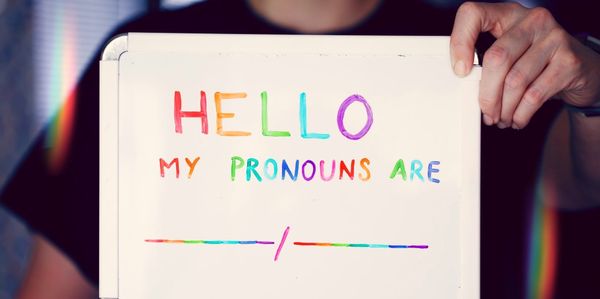
Before anything else, we can get honest about the assumptions we carry about gender. Sexuality has its own myths and layers, the kind we get pigeonholed into early. Gender is a whole other conversation, and most of us were never handed the language to talk about it with any real confidence. Without that language, generalizations harden into stereotypes, no matter a person's age or background.
The fix is smaller than it sounds. It starts with our introductions, our greetings, and the way we describe people, out in public and around our own tables. One of the clearest, most accessible primers I've found is Time's How to Talk to Your Kids About Gender. If you read one thing this month, make it that one.
Kids Will Surprise You
Kids start noticing differences in gender and gender norms as early as 3 or 4. If your kiddos are anything like ours, that means the questions start early and come often, sometimes daily. And honestly, that's a gift. At that age they're endlessly curious and finally able to put words to what they think and feel.
Books are one of the easiest, warmest ways to meet them there. A few that live on our own shelves:
The biggest myth is that there's one "right age" to start, or an age where you're suddenly off the hook. There isn't. With a toddler, it's a picture book and naming who's in our family. With a grade-schooler, it's answering the question honestly, then asking one back. With a teen, it's less talking and a lot more listening, and making sure they know home is the one place they never have to perform.
Different words, same message at every age: you are safe here, you are loved here, and there is nothing about who you are that you have to hide at this table.
Don't Sweat It, Be Genuine, Be True
The world is still a hard place for a lot of queer folks, and harder right now for our trans and non-binary loved ones. And yet, out and proud people are living openly anyway, in statehouses and grocery store lines and group chats, making room for the next person to do the same. Our job is to back them, loudly, wherever we happen to be standing.
To every trans person, and every family raising or loving one: you are not alone. Not even close. We've got each other. And together, we can make anything happen.
Written by
What's Next?




You Can't Just "Move to a Blue State" Anymore: Health Care Is Now a Relocation Variable
Six hospital systems ended care, four of them in states where it's legal. California vetoed a key protection. A federal rule follows clinics everywhere. Here's how to plan a move when the old map no longer holds.